
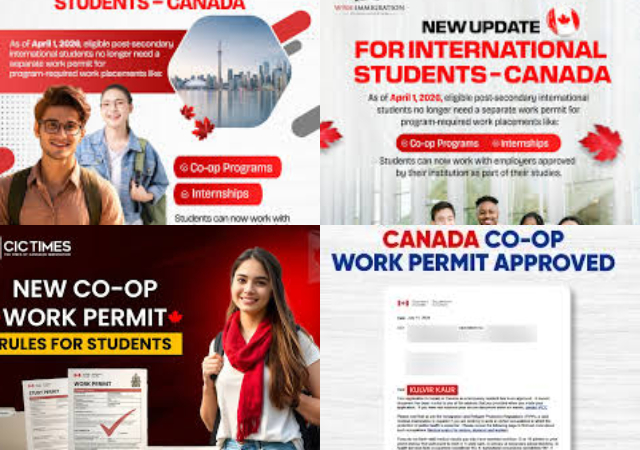
Canada student work permit rules have taken a major turn in 2026, bringing relief to thousands of international students The Canadian government has officially removed the requirement for a separate co op work permit, making it easier for students to participate in internships and work placements tied to their studies
The move, announced by Immigration, Refugees and Citizenship Canada (IRCC), is part of a broader plan to simplify immigration processes and improve the student experience With additional proposals also under review, international students and graduates may soon enjoy even greater flexibility when it comes to working in Canada.
Canada Scraps Co op Work Permit Requirement
As of April 1, 2026, international students in Canada no longer need a separate co op work permit to participate in mandatory work placements This includes internships, practicums, mentorships, and co op programs that are officially part of their academic curriculum
Previously, students were required to apply for an additional permit alongside their study permit, which often caused delays and frustration The new rule eliminates that extra step, allowing students to begin their placements faster and with less stress
According to immigration experts, this change removes a major bottleneck that has historically delayed students from gaining valuable work experience
Who Qualifies Under the New Rules?
Not all students automatically qualify for this new flexibility To be eligible, international students must meet specific conditions set by Canadian authorities
Key Eligibility Requirements
- Must have a valid study permit or have applied for an extension before expiry
- Must be enrolled full time at a Designated Learning Institution (DLI)
- The work placement must be a mandatory part of the academic program
- The program must be at least 6 months long and lead to a certificate, diploma, or degree
- Work placement must not exceed 50% of the total study program
- Must have authorization to work on campus stated on the study permit
- Must provide a letter from the institution confirming the placement requirement
These guidelines ensure that the policy targets genuine students engaged in structured academic programs
New Proposals Could Allow Students Work While Waiting
Beyond the immediate changes, Canada is considering further reforms that could significantly benefit international students and graduates
One major proposal would allow students to work while waiting for decisions on:
Study permit extensions
- Post Graduation Work Permit (PGWP) applications
Currently, many graduates face uncertainty during the gap between completing their studies and receiving their PGWP While some are allowed to work during this period, the rules can be confusing and inconsistent
If approved, the new policy would remove this uncertainty and allow students to work freely during the waiting period, providing financial stability and peace of mind
Why This Policy Matters for International Students
These changes reflect Canada’s broader strategy to remain a top destination for international education By reducing administrative barriers and improving access to work opportunities, the country is making itself more attractive to global talent
For students, this means:
- Faster access to internships and job experience
- Reduced paperwork and processing delays
- Better transition from education to employment
For the Canadian economy, it ensures a steady pipeline of skilled graduates ready to contribute to the workforce


Leave a Reply