
The Nigerian Bar Association (NBA) is once again under the spotlight following its 2026 presidential election, with renewed calls for sweeping reforms to strengthen transparency, credibility, and the rule of law As Nigeria approaches another crucial election cycle in 2027, many legal experts argue that the country’s foremost legal body must first address challenges within its own leadership process
Founded more than a century ago, the NBA has played a pivotal role in defending democracy, constitutional governance, and human rights However, concerns over digital voting, campaign financing, zoning politics, and external political influence have sparked debates about whether the association can continue to uphold its core mission without significant internal reforms
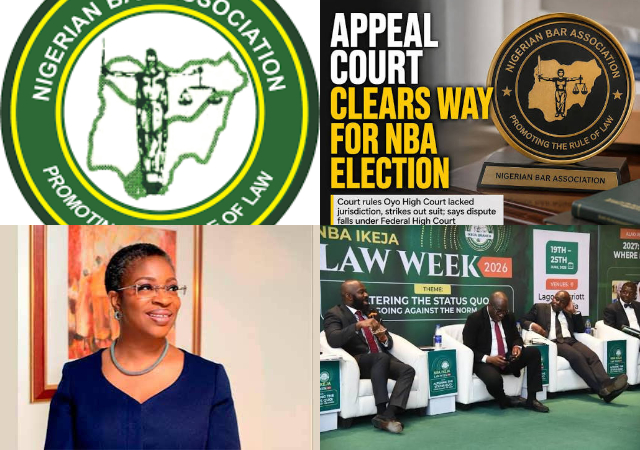
Legal scholar and former chairman of Nigeria’s National Human Rights Commission, Professor Chidi Odinkalu, believes the NBA now faces a defining moment that could shape both its future and its credibility as the guardian of the rule of law
A Century Long Journey of the Nigerian Bar Association
The history of the Nigerian Bar Association dates back to 1900, making it one of Nigeria’s oldest professional bodies. Its leadership has evolved alongside the country’s political development, beginning with Christopher Sapara Williams, Nigeria’s first lawyer, who became the association’s pioneer chairman
Following him were influential legal figures including Sir Kitoyi Ajasa, Olawolu Eric Moore, Eric James Alex Taylor, Adeyemo Alakija, and Alhaji Jubril Martins
Nigeria’s independence in 1960 ushered in a new era with Chief Frederick Rotimi Alade Williams becoming the association’s first president. Since then, the NBA has produced more than thirty presidents, each tasked with advancing its enduring motto of “Promoting the Rule of Law”
The Evolution of NBA Leadership
Throughout its history, NBA presidents have reflected different leadership styles
Some, like Sapara Williams, became symbols of resistance by defending indigenous rights, free expression, and constitutional justice
Others adopted a more collaborative approach with the government of their time These contrasting traditions continue to influence leadership contests within the association today
In recent decades, however, observers believe a third approach pragmatic leadership has become increasingly necessary as the legal profession grows more complex
Major Challenges Facing the NBA
Universal Suffrage and Young Lawyers
The introduction of universal suffrage in NBA elections gave every eligible lawyer the right to vote, replacing the delegate system
While the reform strengthened democracy, it also placed greater responsibility on senior lawyers to address the welfare and professional concerns of younger members, who now constitute the largest voting bloc
The growing population of lawyers has equally highlighted the need for stronger membership databases and improved administrative systems
Zoning and Identity Politics
- The NBA also adopted rotational leadership among Nigeria’s major regions to encourage fairness and inclusion
- Although intended to promote national balance, critics argue that zoning has sometimes encouraged ethnic and regional politics, creating unnecessary divisions during elections.
- Observers note that leadership contests should ultimately be decided by competence and the confidence of the wider membership
Digital Voting and Cybersecurity Concerns
- Electronic voting has modernized NBA elections but has also exposed significant vulnerabilities
During the 2026 NBA election, voting reportedly suffered hours of delay following an alleged cyberattack on the electronic voting platform
The incident has renewed calls for:
- Better cybersecurity infrastructure
- Independent post election audits
- Transparent forensic investigations
- Improved stress testing before future elections
Many legal professionals believe restoring confidence in digital voting is now essential
Money Politics in NBA Elections
- Campaign spending has become another major concern
- According to analysts, leadership contests within the NBA have grown increasingly expensive, forcing candidates to seek financial support from politically connected individuals
- Critics warn that excessive campaign funding could undermine the association’s independence and weaken its ability to hold governments accountable
- Calls are therefore growing for stricter campaign finance regulations and stronger oversight by the Electoral Committee of the Nigerian Bar Association (ECNBA)
Why Transparency Matters Ahead of 2027
With Nigeria preparing for another general election in 2027, many legal commentators believe the NBA must first demonstrate transparency within its own internal processes
Improving election administration, strengthening cybersecurity, regulating campaign financing, and reducing political interference would reinforce public confidence in the association
Supporters of reform argue that a stronger NBA will be better positioned to defend democracy, protect constitutional rights, and continue promoting the rule of law across Nigeria
Looking Ahead
The conclusion of the 2026 NBA presidential election may not mark the end of the legal disputes surrounding the process, as further litigation remains possible
Regardless of the final outcome, many stakeholders agree that the association now has an opportunity to modernize its electoral framework, improve governance, and reinforce the values upon which it was founded more than a century ago
For the Nigerian Bar Association, embracing reform may prove essential not only for its own future but also for Nigeria’s democratic development
Leave a Reply